 |
||
|
Korean War Unlikely, But Risks for Russia Serious RIA Novosti, PUBLISHED April 23, 2013 Radioactive fallout from South Korean nuclear plants blown up by enemy saboteurs could be, for Russia, the worst consequence of a Korean war – should one happen, Russian analysts said. “You could have five or six Chernobyls take place over a relatively small territory,” said Alexander Zhebin, who heads the Center for Korean Studies at the Russian Academy of Sciences' Institute of Far Eastern Studies. The catastrophic 1986 explosion at the Chernobyl nuclear power plant in Ukraine – the worst nuclear disaster in history – was also on the mind of Russian President Vladimir Putin, who said Monday that if events on the Korean Peninsula take a turn for the worse, it could make “Chernobyl…seem like child’s play.” An influx of Korean refugees and exodus of the native population from the unsafe – and already depopulated – far eastern reaches of Russia, and even hits by stray ballistic missiles also made the list of possible consequences of a new Korean war cited by pundits. Russia’s joint economic projects with North Korea, such as the railroad to a new terminal at the North Korean port of Rason, would be put on hold in the event of war, though a skeletal staff would in any event remain at the Russian embassy in Pyongyang to provide the Kremlin with direct contact with the country's leadership, Yevseyev said. Anything But Victory However, the only way for the Korean standoff to escalate into a full-scale war is for some trigger-happy troops on the ground to start shooting over some misunderstanding and despite the will of either Korea’s leadership, Lankov said. “We don’t think either side would open hostilities deliberately, but there’s currently a high risk of involuntary clashes that could detonate the situation,” Russian ambassador-at-large Grigory Logvinov said last Wednesday. Apparently recognizing the danger, North Korea’s young Supreme Leader Kim Jong Un ordered troops on the southern border to avoid shooting first so as not to trigger a counterattack, South Korean media reported last week. Pyongyang, weakened by 15 years of economic trouble and natural disasters, stands no chance of winning a full-scale war and knows it, said Zhebin of the Center for Korean Studies. South Korea is bound to win a prospective second Korean war – but this is what Seoul fears the most, said Lankov of Kookmin University. The human toll would likely be immense, given that Seoul, with its population of 10 million, is within range of North Korean artillery, said the analyst, himself based in the South Korean capital. Furthermore, the postwar reconciliation effort would set back South Korea for decades, given its income gap with its northern neighbor, Lankov said. South Korea's GDP was 17 times that of North Korea in 2011, according to South Korea’s central bank, or about 30 times higher, according to Lankov’s estimate. Aid Not War The current crisis evokes a definite sense of de'ja` vu because, as all experts noted, North Korea is fond of saber rattling. Pyongyang last warned of a war with South Korea in 2009; last year, it even threatened surgical strikes against the offices of South Korean media in central Seoul – but no newsrooms across the world have so far ended up on the wrong end of a North Korean missile. Although the concrete goals of the North Korean leadership can only be guessed at, an attempt to secure more foreign aid is a plausible theory, analysts agreed. North Korea received about 12 million tons of food from foreign donors over the past 15 years, according to the World Food Programme, with about half of that coming from Japan, South Korea and the United States, although the latter two mostly cut their food supplies to Pyongyang after 2009. About 45 percent of North Korea’s food currently comes from China, according to the Council on Foreign Relations, an independent nonpartisan think-tank based in New York. The expectations of blackmail were echoed by South Korean President Park Geun-hye, who spoke Tuesday of an “endless vicious cycle of [North Korea] creating crises before reaching compromises in exchange for aid.” Pyongyang's flaunting of its nuclear weaponry may also be an attempt to push for global acceptance of North Korea as a nuclear state, similar to India, Pakistan and Israel, Zhebin said. Recognition of North Korea’s nuclear status was designated a strategic goal for the country at a session of the central committee of the ruling Workers' Party of Korea in late March. The decision was criticized by the Russian Foreign Ministry as defying the UN Security Council’s non-proliferation efforts. Small-scale military provocations to prove North Korea means business are more likely than an all-out war, experts said. These, too, have happened before, most notably the 2010 sinking of the South Korean corvette Cheonan, blamed by Seoul and Washington on a North Korean torpedo. “But the North doesn’t give warning when it really intends to shoot,” said Lankov, who predicted a minor incident closer to the end of the year. Other news: The transaction on consolidation of a 100% stake in Uranium One Inc. by ARMZ Uranium Holding Co. has been approved both by the Ontario Superior Court of Justice in Canada, and regulators in Russia, Australia and the USA. Russia Eyes Nuclear Power Project in Finland – Source A government source told RIA Novosti. Belarus NPP: the construction is ahead of schedule In September 2013 it is necessary to complete work on all 62 facilities of the construction support base and off-site grids and utilities. |
Hero of the day 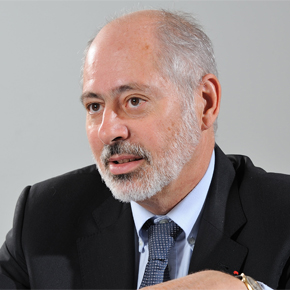
Jacques Repussard: knowledge, independence, proximity They told me: "Mr Repussard, we're not used to responding to anti-nuclear organisations". To which I replied: "We will not reveal any state or trade secrets, but we will not leave them without any answer". INTERVIEW
Georgy Toshinsky OPINION
Andrey Zolotov, Jr. 
|